24-Hour Dispensaries in Los Angeles Are Illegal
The risks of buying from unlicensed cannabis shops — and how to verify a legal dispensary
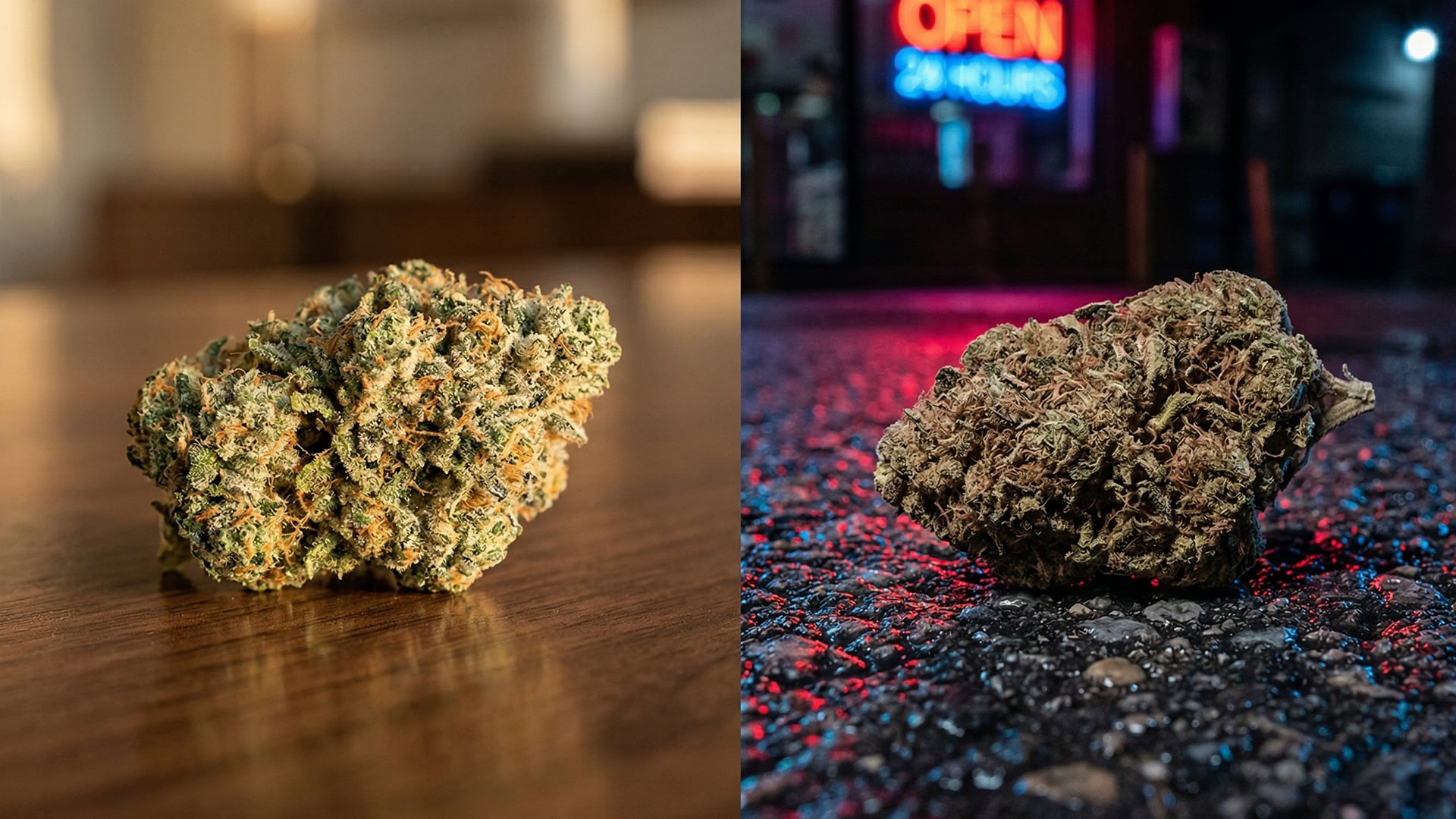
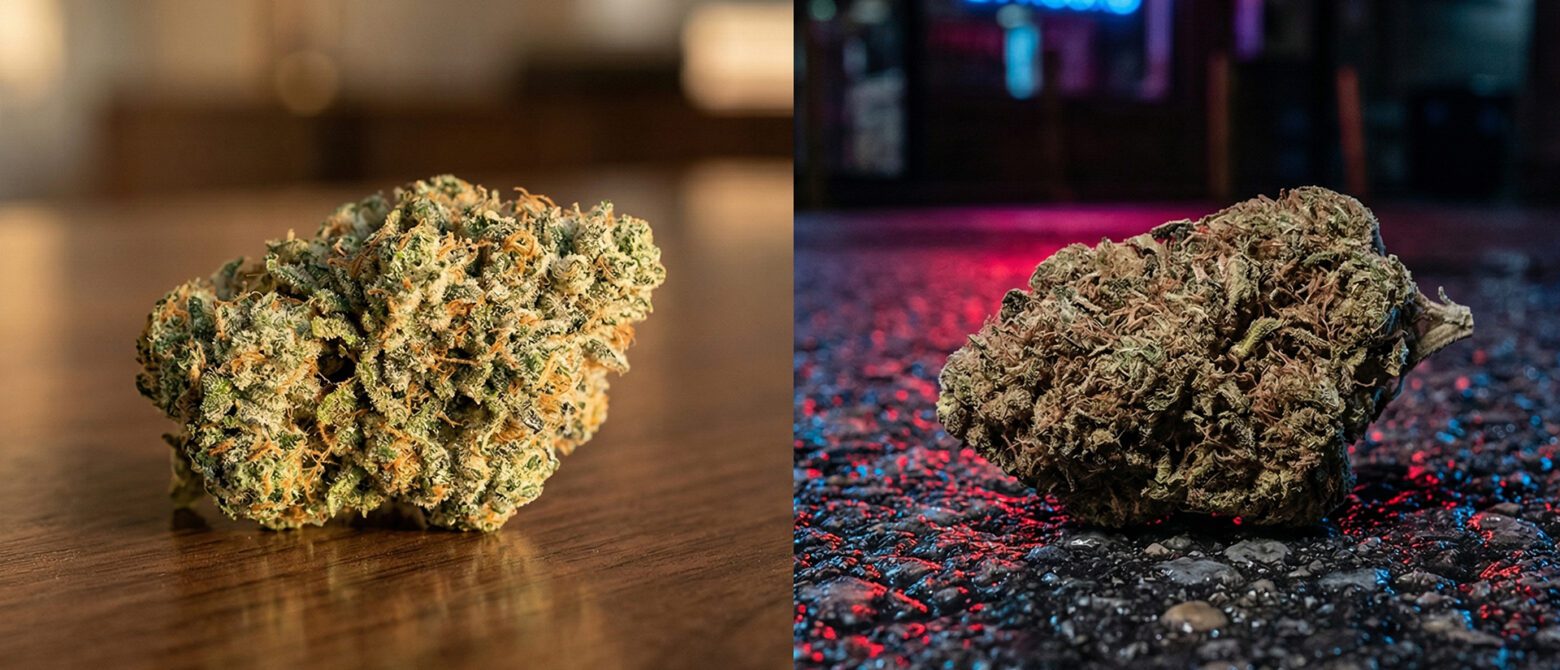
Search "dispensary open 24 hours near me" late at night in Los Angeles and you'll find results. Storefronts with neon signs, no line, and someone buzzing you in at 2 AM. It feels convenient. But every single one of those shops is operating illegally under California and Los Angeles law. And the products they sell could put your health at serious risk.
Here's what every LA cannabis consumer needs to know before walking into one of those doors.
It's Illegal. Period.
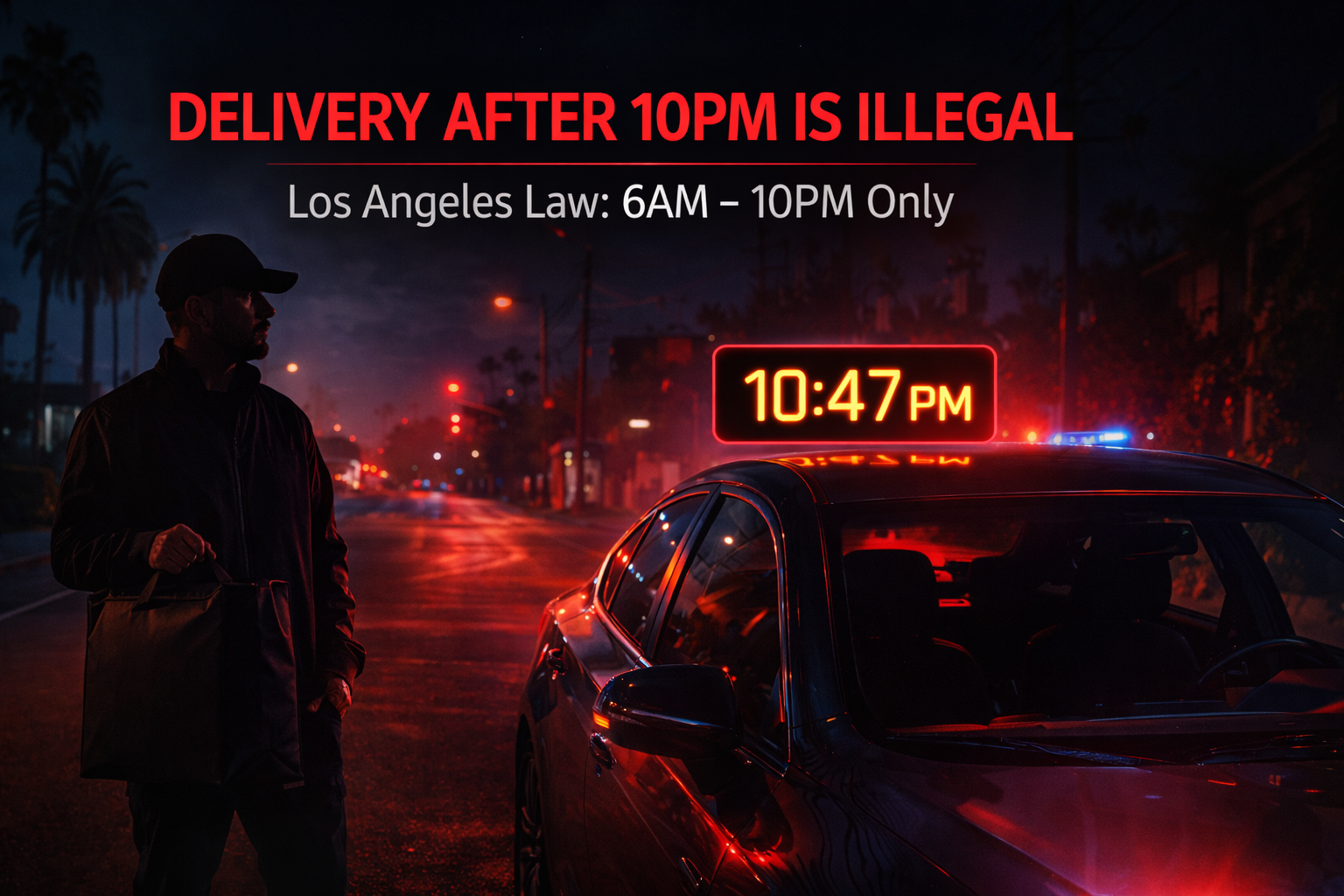
Licensed cannabis dispensaries in the City of Los Angeles are required to operate between 6:00 AM and 10:00 PM only. This isn't a suggestion or a guideline — it's codified in the Los Angeles Municipal Code (LAMC), Article 4, Chapter X, the city's cannabis regulatory framework enforced by the LA Department of Cannabis Regulation (DCR).
Any dispensary advertising 24-hour operation in LA is, by definition, unlicensed. No legal retailer has authorization to sell cannabis outside that window. It is the single clearest red flag that you're dealing with an illegal operation.
— LA Department of Cannabis Regulation
The Scale of the Problem
The illegal cannabis market in Los Angeles is massive. At any given time, hundreds of unlicensed cannabis shops operate across the city — significantly outnumbering the roughly 200 legally licensed retail locations. Statewide, the illegal cannabis market is estimated to rival or exceed the legal market in total revenue.
Governor Newsom established the Unified Cannabis Enforcement Taskforce (UCETF) in 2022 specifically to coordinate state and local agencies against the illegal market. The taskforce — which includes the Department of Cannabis Control, California Highway Patrol, and CDTFA — has seized tens of millions of dollars in illegal cannabis products and shut down hundreds of unlicensed operations.
What You're Actually Buying
When you buy from a licensed dispensary, every product on the shelf has passed mandatory laboratory testing regulated by the California Department of Cannabis Control (DCC). Products are tested for:
- Pesticides — including chemicals banned for human consumption
- Heavy metals — lead, arsenic, cadmium, mercury
- Microbial contaminants — mold, bacteria, E. coli, salmonella
- Residual solvents — from the extraction process in concentrates
- Foreign material — glass, hair, insects, or other physical contaminants
Products from unlicensed shops skip all of this. Every single test. There is zero quality control, zero oversight, and no accountability if a product makes you sick.
Real Health Dangers from Unlicensed Products
Directly linked to the 2019 EVALI lung injury outbreak that hospitalized thousands. The CDC confirmed the majority of cases involved illicit-market THC vape products
The DCC has documented illegal products with pesticide levels far exceeding safe thresholds
Particularly in unregulated vape hardware where cheap metals like lead leach into the oil
THC percentages are fabricated, dosages are wrong, and ingredients are not disclosed
Unlicensed shops have no inventory oversight. Edibles, tinctures, vape cartridges, and flower sitting on shelves long past their expiration date is common. Expired cannabis products lose potency, develop mold, and the oils in vape carts and edibles degrade into compounds that can cause nausea, headaches, and respiratory irritation
Licensed dispensaries use California's track-and-trace system to pull contaminated or expired batches from shelves. Unlicensed shops have no tracking system at all — if a product is bad, there's no way to identify it, recall it, or notify anyone who already bought it
How to Spot an Illegal Dispensary
Not every unlicensed shop is obvious. Some have professional signage, security guards, and product displays that look legitimate. But there are clear tells:
How to Search for Licensed Dispensaries in Los Angeles
You don't have to guess. California and the City of Los Angeles both provide free, public tools that let anyone search for licensed dispensaries. It takes less than 60 seconds and it should be the first thing you do before buying cannabis from anywhere.
Step 1: Search the California State License Database
The California Department of Cannabis Control runs an official license search at search.cannabis.ca.gov. Here's how to use it:
- Go to search.cannabis.ca.gov
- Type the dispensary's name or street address into the search bar
- Look for a result with License Status: Active and License Type: Retailer
- If nothing comes up — or the status says "Revoked," "Expired," or "Suspended" — that dispensary is not authorized to sell cannabis in California
Every legal dispensary in the state is in this database. No exceptions. If a shop isn't listed, they don't have a license.
Step 2: Confirm the LA City License
A state license alone isn't enough — dispensaries in Los Angeles also need a local license from the city. The LA Department of Cannabis Regulation (cannabis.lacity.gov) maintains the official list of all authorized cannabis businesses operating within city limits. You can search by business name or browse the full directory. If a dispensary doesn't appear on both the state and city lists, it's not legal.
What a Real License Looks Like
A legitimate California cannabis retail license includes a license number in the format C10-XXXXXXX-LIC (the "C10" prefix specifically identifies a retail license). The dispensary should display this number on their website and inside their store. For example, LAX Cannabis Club holds active state license C10-0000141-LIC — you can click that link and verify it yourself right now on the state database.
If a dispensary can't show you a number like that, or if the number they show doesn't come back as "Active" on search.cannabis.ca.gov, don't buy from them.
Who Gets Hurt by Illegal Shops
It's not just your health at risk. Every dollar spent at an unlicensed dispensary:
- Evades state and local cannabis taxes — taxes that fund public schools, drug abuse prevention, and environmental restoration under California Revenue and Taxation Code Section 34010
- Undercuts licensed businesses — legal dispensaries invest heavily in compliance, testing, and safety. Illegal shops have none of those costs and can sell at artificially low prices
- Undermines social equity programs — LA's Social Equity Program was designed to ensure communities disproportionately impacted by the war on drugs benefit from legalization. Illegal operators drain resources from that mission
- Often involves other criminal activity — unlicensed operations frequently lack security standards, attract robberies, and are linked to broader illegal distribution networks
What Happens When They Get Caught
The City of Los Angeles and the State of California are actively shutting down illegal cannabis operations. The LA City Attorney's Office pursues civil enforcement and nuisance abatement actions. LAPD participates in joint enforcement operations with the DCC and UCETF.
Penalties for operating an unlicensed cannabis business in California include:
- Fines up to $30,000 per violation per day under state law
- Criminal charges under Business and Professions Code, Division 10 (MAUCRSA)
- Property seizure and nuisance abatement under Health and Safety Code Section 11570
- Back taxes, penalties, and interest from the CDTFA
These shops get shut down, reopen somewhere else, and get shut down again. But the cycle only continues because consumers keep walking in.
Buy Legal. Buy Safe. Buy Licensed.
Convenience isn't worth the risk. A dispensary that's open at 2 AM in Los Angeles has no license, no lab-tested products, and no accountability. The "deal" you think you're getting could contain pesticides, heavy metals, or synthetic additives that no lab has ever tested.
Licensed dispensaries like LAX Cannabis Club exist because we went through the process — state licensing, city licensing, lab testing on every product, full compliance with California's regulatory framework. Our license is public record: C10-0000141-LIC. We're open 9:00 AM to 9:30 PM daily, because that's what the law allows.
Sources & Official References
- California Department of Cannabis Control (DCC) — State cannabis regulatory authority
- DCC License Search Tool — Verify any dispensary's license status
- DCC Laws & Regulations — Full California cannabis regulatory text
- Unified Cannabis Enforcement Taskforce (UCETF) — State enforcement coordination
- LA Department of Cannabis Regulation — City of LA licensing authority
- Los Angeles Municipal Code — City cannabis operating regulations
- LA Social Equity Program — Community reinvestment through legal cannabis
- MAUCRSA — California Business & Professions Code, Division 10 — State cannabis law
- CDC EVALI Investigation — Lung injuries linked to illicit THC vape products
- LA City Attorney's Office — Civil enforcement against illegal dispensaries
Shop a Licensed, Lab-Tested Menu
LAX Cannabis Club is a fully licensed California dispensary near LAX. Every product is lab-tested, properly labeled, and sold in compliance with state and city law. Open daily 9 AM – 9:30 PM.